
Why Siruseri cricket practice nets need layout-first checks
Cricket practice nets are not just background mesh. A good net lane controls ball direction, protects nearby people and property, and makes practice feel focused. In Siruseri, cricket nets may be installed on terraces, in gated community play corners, near schools, at coaching spaces, or beside office-community recreation areas. Each setting has different space and safety demands.
The common mistake is to ask only for length and height. Batting direction, bowler run-up, ball speed, roof edges, neighboring windows, lighting, flooring, and access all matter. A net that is too low or too loose can allow balls to escape. A net that is poorly placed can make practice uncomfortable.
This Siruseri notes explains cricket practice net checks for terraces, academies, apartments, box cricket corners, children, adults, material choice, maintenance, and quote comparison. It is written as a area detailed service notes, not as a standard sports-net description.
Practice Purpose
The net should match the kind of cricket being played
A child practicing throwdowns needs a different layout from adult hard-ball practice. A casual apartment box-cricket corner is different from an academy lane. The installer should ask who will use the net, what ball type is used, how fast the ball travels, and whether bowling, batting, or both happen in the space.
Siruseri practice spaces often serve mixed users. Children may train in the evening, adults may play on weekends, and community members may use the same area casually. The net must be strong enough for the highest expected use, not only the lightest one.
Ball Containment
A cricket net must stop escape paths before they become complaints
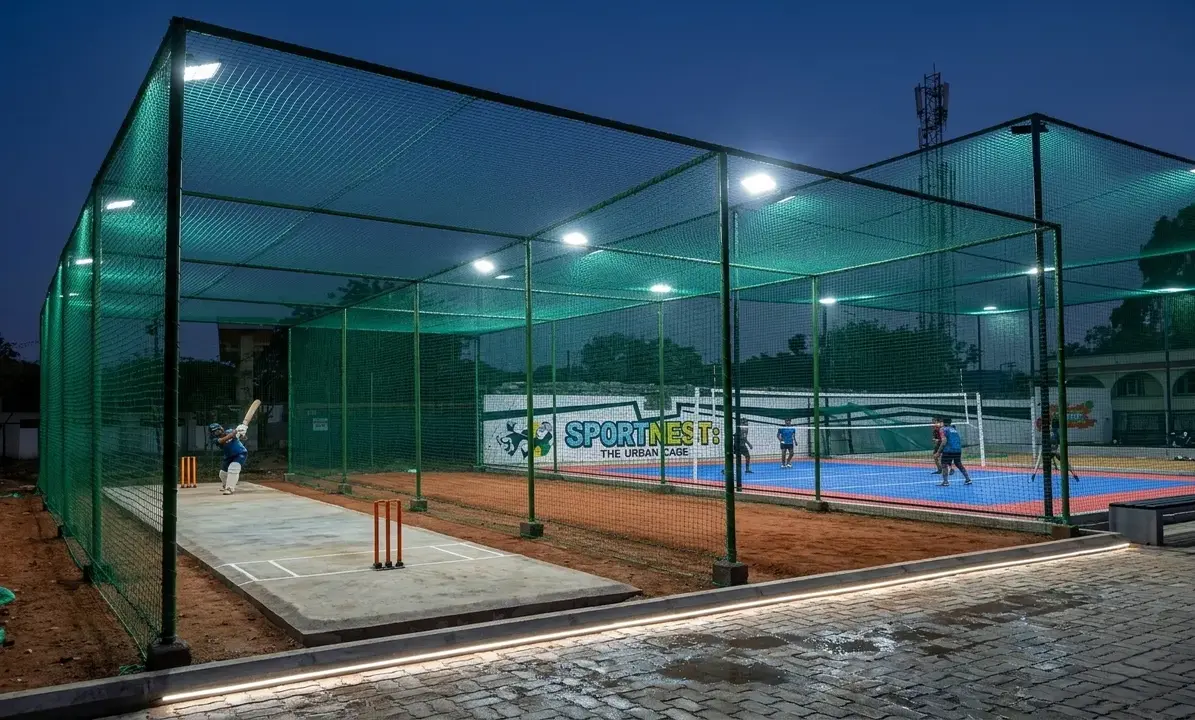
The main job of a cricket practice net is containment. Balls can escape over the top, through side gaps, under loose edges, or around an open entry. In apartments and terraces, one escaping ball can damage glass, hit a vehicle, or create a neighbor complaint. The layout should close realistic ball paths.
Containment checks includes net height, side overlap, backstop strength, roof coverage where needed, and bottom fixing. The installer should think like a ball: where will a top edge, pull shot, straight drive, or mishit travel? That thinking creates a safer lane.
Terrace Use
Terrace cricket nets need edge, wind, and drainage awareness
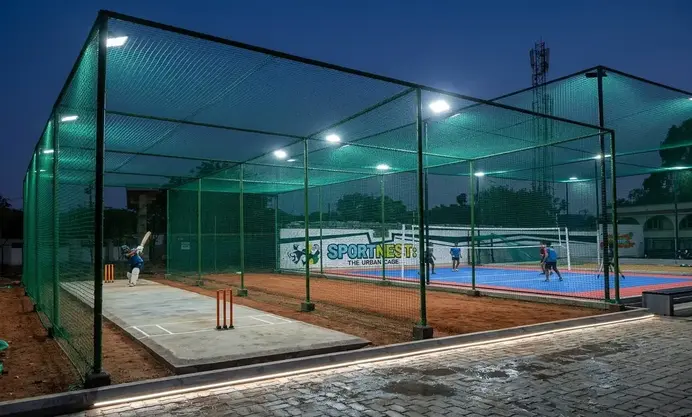
Terrace cricket practice in Siruseri can work well, but roof edges and wind exposure matter. The net should not create a sail-like loose surface in strong wind. Anchors and supports must suit the terrace surface, and the layout should keep drainage and maintenance routes open.
If children practice on the terrace, combine sports containment with terrace safety thinking. A net that stops balls but leaves a low parapet exposed may still be incomplete. The site visit should review both sports and open-edge risks.
Academy Lanes
Coaching spaces need repeat-use durability
Academy or coaching nets receive repeated hits, daily pulling, and more intense use than a home lane. Material quality, knot strength, support spacing, and repair access matter. A cheaper net may look acceptable at opening but wear quickly under real practice.
The installer should understand expected usage hours, ball type, player age, and whether multiple lanes are needed. For coaching spaces, the finish should also support easy supervision, safe movement, and clear separation between lanes.
Community Areas
Apartment cricket corners must protect non-players too
Gated communities may place cricket nets near walkways, parking, gardens, or clubhouse zones. The net should protect people who are not part of the game. Entry openings, spectator areas, and nearby paths should be considered before deciding the line.
Association approval may be required. A clear plan showing net height, support positions, ball containment, and maintenance responsibility helps residents understand the purpose. Community sports work is easier when safety is explained upfront.
Material Choice
Mesh strength should match ball type and practice intensity
Tennis-ball cricket, soft-ball practice, and hard-ball cricket place different demands on netting. The installer should not recommend one material for every use. Mesh thickness, knot strength, border rope, and support spacing should follow the expected impact.
Outdoor Siruseri installations also need weather durability. Sun, rain, and dust affect material over time. Ask how the net should be inspected and when repairs or replacement may be needed. Sports nets are performance equipment, not decoration.
Lighting And Flooring
Practice quality depends on the whole lane, not only the net
A cricket net may need suitable flooring, mat placement, lighting, and safe walking space. If the surface is slippery or uneven, practice quality suffers. If lighting creates glare or shadows, batters may struggle. The net layout should leave enough room for practical use.
DK Safety Solutions may not be changing the whole sports surface in every job, but the installer should still notice these conditions. A good net lane supports training, not only containment.
Quote Checks
Cricket net quotes should include height, supports, and usage
Cricket net cost depends on length, width, height, material, support structure, roof coverage, access, ball type, and whether the installation is temporary or permanent. A phone estimate can be useful, but final pricing should follow layout details.
Send photos of the practice area, nearby windows, terrace edges, paths, floor surface, and expected batting direction. The quote should explain what is included, what is not included, and how future repairs can be handled.
Bowler And Batter Flow
A useful lane gives both players enough movement space
Cricket practice becomes frustrating when the bowler has no run-up, the batter feels cramped, or people have to walk through the hitting line. Siruseri layouts should consider where the bowler starts, where waiting players stand, and how balls are collected after each set. Netting alone does not create a good practice lane.
If the space is short, the installer should be honest about what type of practice is realistic. Throwdowns, soft-ball drills, and junior batting may work in tighter areas, while full run-up practice needs more depth and stronger containment. A good quote should match the training style to the space.
Noise And Timings
Community practice spaces should reduce avoidable disturbance
In apartment communities, cricket practice can create complaints when balls hit walls, metal gates, parked vehicles, or neighboring balconies. A net cannot remove all sound, but it can reduce repeated impact outside the lane. Positioning matters because the wrong direction can send every mishit toward a sensitive area.
Associations may also define play timings. A clear practice area with proper containment makes those rules easier to follow. Residents see that the play is managed rather than random, which improves acceptance of the installation.
Repair Access
Practice nets should be easy to inspect after repeated ball impact
Cricket nets take concentrated impact in the same zones again and again, especially behind the batter and along side seams. If damage begins, it should be easy to inspect and repair before the tear grows. A lane that cannot be accessed for maintenance will become unsafe faster.
Siruseri academies and communities should ask how replacement sections, border rope repairs, and support adjustments are handled. A sports net is not a one-time decorative fitting; it is equipment that needs periodic care.